

Problematic gifts 📖💿🎥
Tuesday Trio: One book, one record, and one movie recommendation


Hey y’all,
This is the second letter in a new series I’m calling “Tuesday Trio” — one book, one record, and one movie based on a theme. Thanks to everybody who sent kind words about the first letter, “Radioactivity.”
Inspired by the season of giving (and gift guides), today’s theme is “Problematic Gifts.”
📖 The Gift by Lewis Hyde

The first problem with The Gift is that it isn’t very easy to explain. “Books that are hard to explain may, one hopes, be more useful in the long run,” Hyde writes, “but they are also the harder to commodify for a ten-second sell.” The Gift was originally published in 1983 with the subtitle, “Imagination and the Erotic Life of Property.” It became a kind of cult classic for writers and artists, and when it was reissued in 2007, it was given the more salable subtitle, “Creativity and the Artist in the Modern World.”
“Works of art exist simultaneously in two ‘economies,’ a market economy and a gift economy,” Hyde writes. “Only one of these is essential, however: a work of art can survive without the market, but where there is no gift there is no art.” Artists are “gifted,” but they face the problem of what, exactly, to do with their gift. They have to nurture and share their gift in a world that is dominated by the market. A very tricky business, and maybe the hardest creative tension to navigate. (See Ted Gioia’s recent post, “Why I Take Gifts Seriously.”)
The second problem with The Gift is it’s not the easiest book to read! Not because it isn’t well-written, but because it’s long and dense. Hyde takes his time, and I often wonder if, like Jung, his ideas are more easily digested through the work of others. For example, Hyde’s work was influential on Robin Wall Kimmerer’s bestseller Braiding Sweetgrass — a search of the ebook yields 284 results for the word “gift.”
I think that maybe the most beautiful depiction of the problem Hyde addresses is in the form of James Sturm’s comic book, Market Day, which deals with the struggle of the artist and, in the words of Scott McCloud, the “cold harsh reality that all artists exist in the societal context and that whatever your artistic dreams, there’re still mouths to feed. There’s still a market that can crush you. You’re still in this hyper-competitive world, which everybody is clambering up the ladder hoping not to be eaten by the crocodiles underneath.”
💿 A Christmas Gift for You from Phil Spector
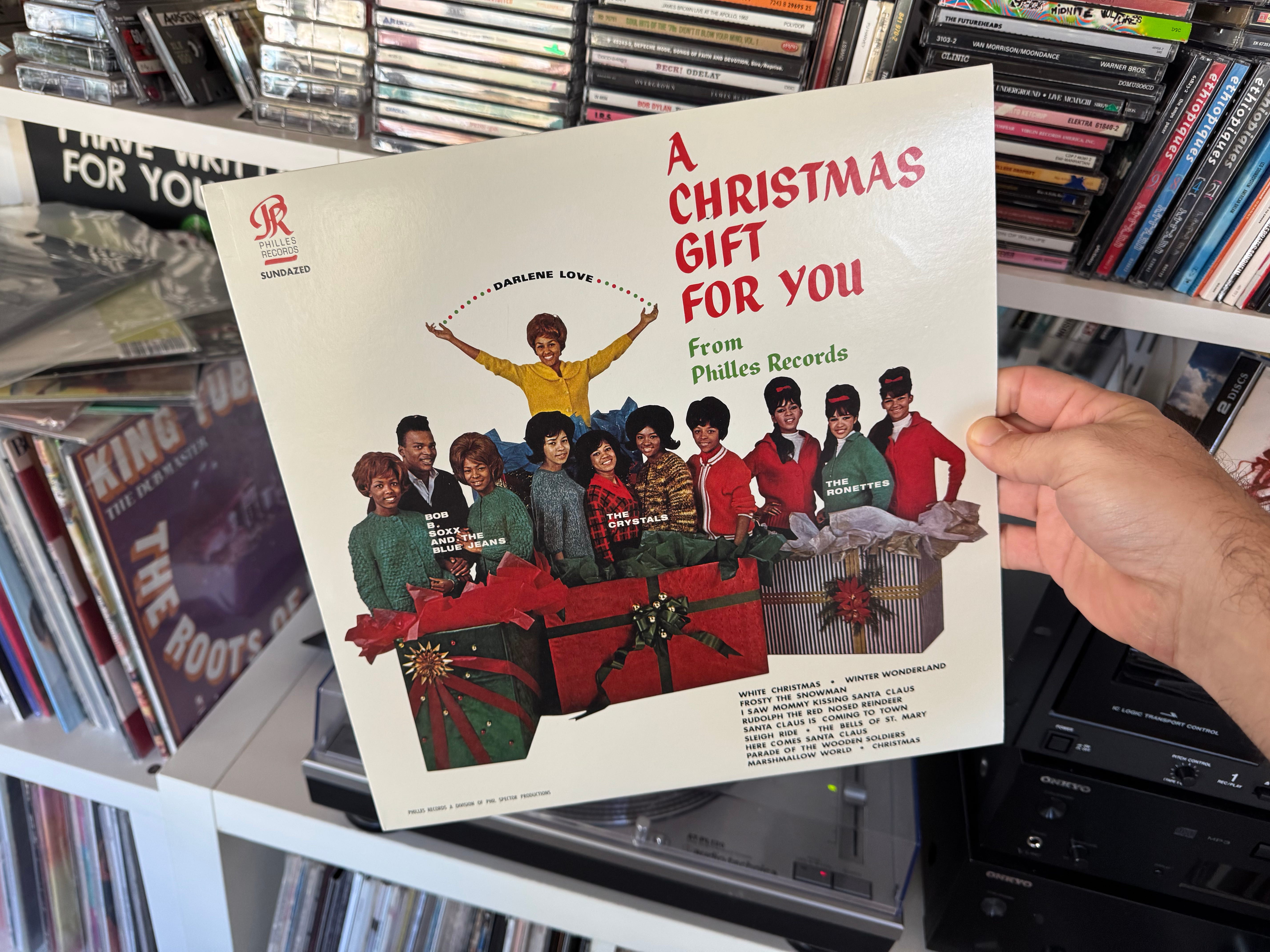
What do we do with beautiful things made by terrible men? When it comes to this 1963 classic, it helps just a little bit if you can get an original or reissue with its original title: A Christmas Gift for You from Philles Records. (The label got its name from the founders: Phil Spector and Lester Still.)
If you already love this record, do yourself a favor, maybe, and just don’t read anything more about the making of it. Let the “Wall of Sound” dazzle you like it did Brian Wilson and countless others. But if you think can handle it, dive in and marvel at how so much darkness can bring so much light.
For me, the brightest point is Darlene Love singing “Christmas (Baby Please Come Home).“ David Letterman loved the song so much he asked her to perform it on his show every year at Christmastime for almost three decades — here’s a supercut of them all. (She’s 84 now, and still singing it — she’s scheduled to appear on The Tonight Show on December 18th.)
Keep reading with a 7-day free trial
Subscribe to Austin Kleon to keep reading this post and get 7 days of free access to the full post archives.